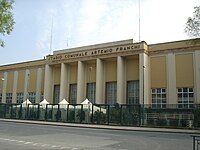
Palermo (Sicilian: Palermu, Latin: Panormus, from Greek: Πάνορμος, Panormos) is a historic city in Southern Italy, the capital of the autonomous region Sicily and the Province of Palermo. The city is noted for its rich history, culture, architecture and gastronomy, playing an important role throughout much of its existence; it is over 2,700 years old. Palermo is located in the north west of the island of Sicily, right by the Gulf of Palermo in the Tyrrhenian Sea.
The city was founded by the Phoenicians, but named by the Ancient Greeks as Panormus meaning all-port. Palermo became part of the Roman Republic and eventually part of the Byzantine Empire, for over a thousand years. For a brief period it was under Arab rule where it first became a capital. Following the Norman reconquest, Palermo would become capital of a new kingdom from 1130 to 1816 the Kingdom of Sicily. Eventually it would be united with the Kingdom of Naples to form the Two Sicilies until the Italian unification of 1860.
The population of the Palermo urban area is estimated by Eurostat to be 855,285, while its metropolitan area is the fifth most populated in Italy with around 1.2 million people. In the central area, the city itself has a population of around 670 thousand people, the inhabitants are known as Palermitans or poetically panormiti, the languages spoken by its inhabitants are the Italian language and the Sicilian language
Evidence for human settlement in the area now known as Palermo goes back to the Pleistocene Epoch, around 8000 BC. This evidence is present in the form of cave drawings at nearby Addaura crafted by the Sicani, who according to Thucydides arrived from the Iberian Peninsula (perhaps Catalonia). During 734 BC the Phoenicians, a sea trading peoples from the north of ancient Canaan built a small settlement on the natural habour of Palermo, some sou
 rces suggest they named the settlement "Ziz." The Greeks who were the most dominant culture on the island of Sicily, due to the powerful city state of Syracuse to the east, instead called the settlement Panormus. Its Greek name means "all-port" and it was named as so because of its fine natural harbour. Palermo was then passed on to the Phoenician's descendants and successors, in the form of the Carthaginians.
During this period it was a centre of commerce; however a power struggle between the Greeks and the Carthaginians broke out in the form of the Sicilian Wars, causing unrest. It was from Palermo that Hamilcar's fleet which was defeated at the Battle of Himera was launched. Palermo eventually became a Greek colony when Pyrrhus of Epirus gained it during the Pyrrhic War period in 276 BC. However as the Romans flooded into Sicily during the First Punic War, the city became under Roman rule only three decades later. The Romans made sure that, in the words of Roman consul M. Valerian to the Roman Senate; "no Carthaginian remains in Sicily". This period was quite a calm time for Palermo, which was growing into an important Roman trade centre, also during this period Christianity first began to be practised in Palermo